





Have you ever looked at your electric bill and wondered, “Why did my bill go up? I didn’t change my thermostat or my daily routine.” If so, you’re not alone. It’s one of the most common questions Corridor Energy Cooperative receives. In many cases, the answer is simple: the weather changed.
Even if your thermostat stays at the same setting, your heating or cooling system may have to run much longer to keep your home comfortable. The greater the difference between the outdoor temperature and your thermostat setting, the harder your HVAC system has to work.
Weather Has A Bigger Impact Than You Think
Utilities use a measurement called heating and cooling degree days to compare how much heating or cooling was needed from one month to the next.
- Cooling Degree Days (CDD) measure how much cooling is needed when temperatures rise above 65°F. More cooling degree days generally mean your air conditioner runs longer.
- Heating Degree Days (HDD) measure how much heating is needed when temperatures fall below 65°F. More heating degree days generally mean your heating system runs longer.
Degree days help explain why your electric bill can change even when your thermostat setting does not.
Learn more about heating and cooling degree days and compare monthly weather trends.
Why Cooling Use Increases
As outdoor temperatures and humidity rise:
- Air conditioners run longer to maintain the same indoor temperature and remove moisture from the air.
- Fans and dehumidifiers may run more often to improve comfort and manage humidity.
- Refrigerators and freezers work harder, especially in warm garages or other unconditioned spaces.
- Homes gain heat faster through sun-exposed windows, air leaks, and insufficient insulation.
The greater the difference between outdoor conditions and the temperature and humidity you want indoors, the more energy your cooling system generally needs.
A Real Corridor Example
July 2026 experienced 40% more cooling degree days than June 2026. Even if your thermostat stayed at the same setting, your air conditioner likely had to run much longer to keep your home comfortable. More runtime generally means more electricity use.
This is one of the first things Corridor Energy Cooperative reviews when helping members understand changes in monthly energy use.
See The Difference With SmartHub
SmartHub makes it easier to see how weather affects your energy use. Daily and hourly usage graphs allow you to compare your electricity use with outdoor temperatures and determine whether higher usage was caused by hotter weather or something else.
Notice The Pattern
As average outdoor temperatures increased near the end of June into July, daily electricity use increased as well. Even though nothing inside the home changed, the air conditioner had to run longer to maintain the same indoor temperature. SmartHub helps you visualize this relationship so you can better understand changes in your electric bill.
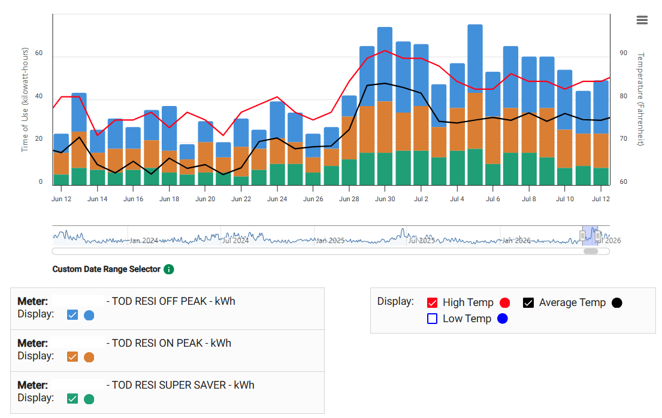
If your energy use increases unexpectedly when the weather has not changed, SmartHub can also help identify unusual energy use that may indicate equipment problems or other issues worth investigating.
Managing Weather-Related Energy Use
While we cannot control the weather, we can reduce how hard our HVAC has to work:
- Monitor daily energy use in SmartHub to better understand your home’s energy patterns.
- Seal air leaks around doors, ceiling fans, windows, and attic penetrations.
- Replace or clean HVAC filters regularly.
- Schedule annual heating and cooling system maintenance.
- Add attic insulation to reduce heat gain in summer and heat loss in winter.
A changing electric bill does not always mean something is wrong. Often, it simply means your heating or cooling system worked harder to keep your home comfortable as the weather changed.